

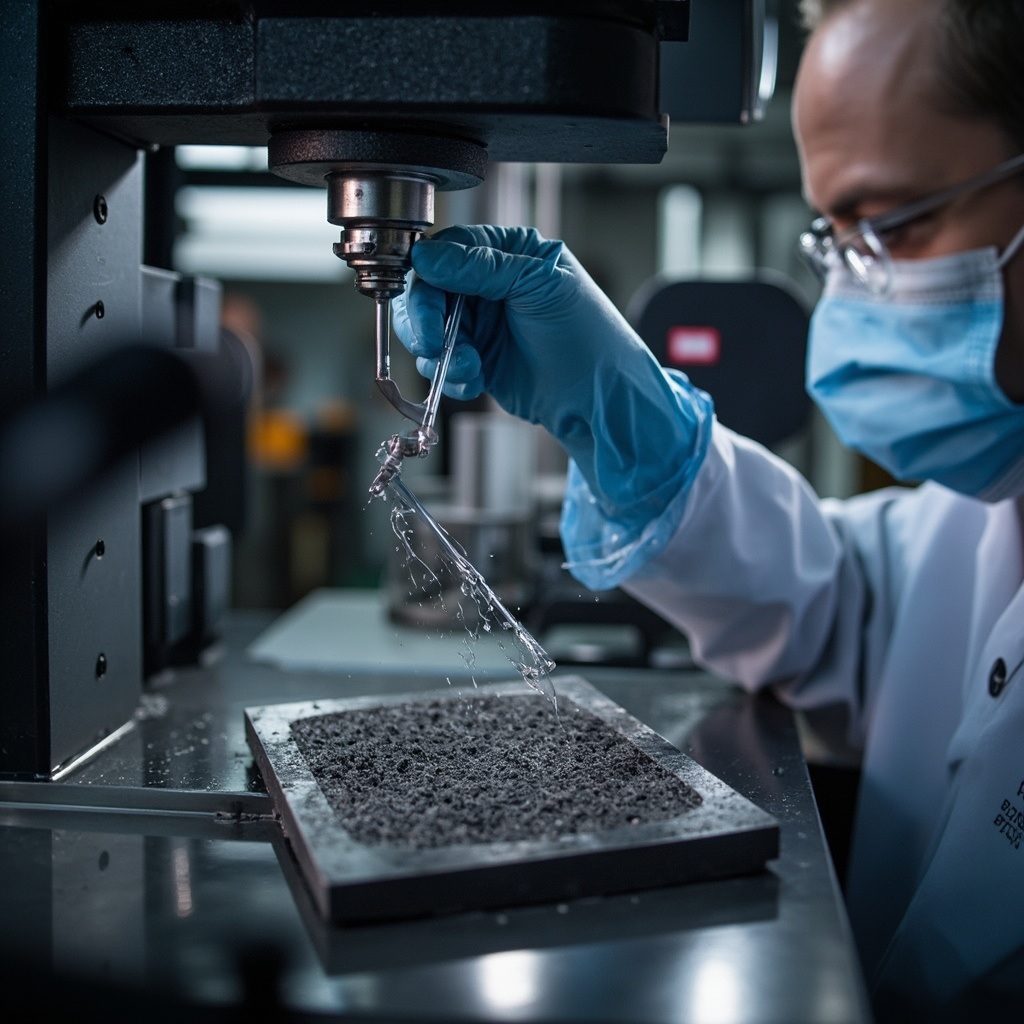
 The moment a microscopic speck of dust lands on a High-Purity Graphite component, the game is over. Not dramatic? Tell that to the semiconductor fabricator whose entire batch of wafers just got ruined because a single carbon flake contaminated the chamber. High-purity graphite machining is not about making shapes; it is about preserving a state of absolute cleanliness. You are not a machinist here. You are a guardian against chaos.
Let’s cut the fluff. The biggest lie in this industry is that “clean enough” exists. It does not. When you are dealing with graphite destined for crucibles, heating elements, or EDM electrodes, the enemy is not just dirt. It is porosity. Graphite is a sponge. It breathes in oils, coolant mist, and airborne particulates like a lung. Once that contamination sinks in, no amount of surface wiping will save it. You have to stop the invasion before it starts.
So, what does a real protocol look like? It starts with the air. You cannot machine ultra-pure material in a standard shop environment where someone just cut aluminum an hour ago. The facility needs HEPA filtration, positive air pressure, and a strict separation of zones. Raw stock comes in through a decontamination airlock. Tools are dedicated. Not “mostly dedicated.” Dedicated. If a cutter has touched a lower-grade material, it leaves a residue. That residue transfers. Period.
Then there is the coolant dilemma. Most shops drown their work in flood coolant. For high-purity graphite? That is suicide. The liquid wicks into the micro-cracks and becomes a permanent impurity. The smarter play is dry machining with aggressive vacuum extraction. If you must use a lubricant, it has to be a food-grade, non-residue mist applied in the absolute minimum quantity. Better yet, invest in cryogenic cooling with liquid nitrogen. It keeps the part clean and the tool sharp.
But here is where most protocols fall apart: the handling. The part comes off the machine looking pristine. Then a technician grabs it with bare hands. Skin oils contain salts and fatty acids. They etch into graphite. Within hours, a ghostly fingerprint appears. That fingerprint is a contamination hotspot. The solution is brutal simplicity: no bare hands, ever. Powder-free nitrile gloves, changed every thirty minutes. Tools are cleaned with isopropyl alcohol between every single operation. The workbench is covered in a disposable, anti-static mat that gets replaced after each job.
The real secret weapon, though, is the final cleaning process. Ultrasonic baths are standard, but the frequency and chemistry matter. A 40 kHz bath is for jewelry. For high-purity graphite, you need 80 kHz or higher to shake particles out of the deep pores without damaging the surface. The solvent must be absolute-grade alcohol, not the industrial stuff with stabilizers. And after the bath? No air drying. That just re-deposits airborne dust. Use a clean, filtered nitrogen blow-off, followed by a vacuum bake at 150 degrees Celsius to outgas any residual moisture.
Why go through all this trouble? Because the market pays a premium for purity. A single contaminated batch can cost a client a million-dollar production run. When you deliver a component that is spectrographically clean, you are not selling graphite. You are selling reliability. You are selling the absence of failure. That is a product advantage that no low-cost competitor can touch.
So, keep it clean. Not because a manual tells you to. Because the alternative is a pile of scrap that smells like lost money.